
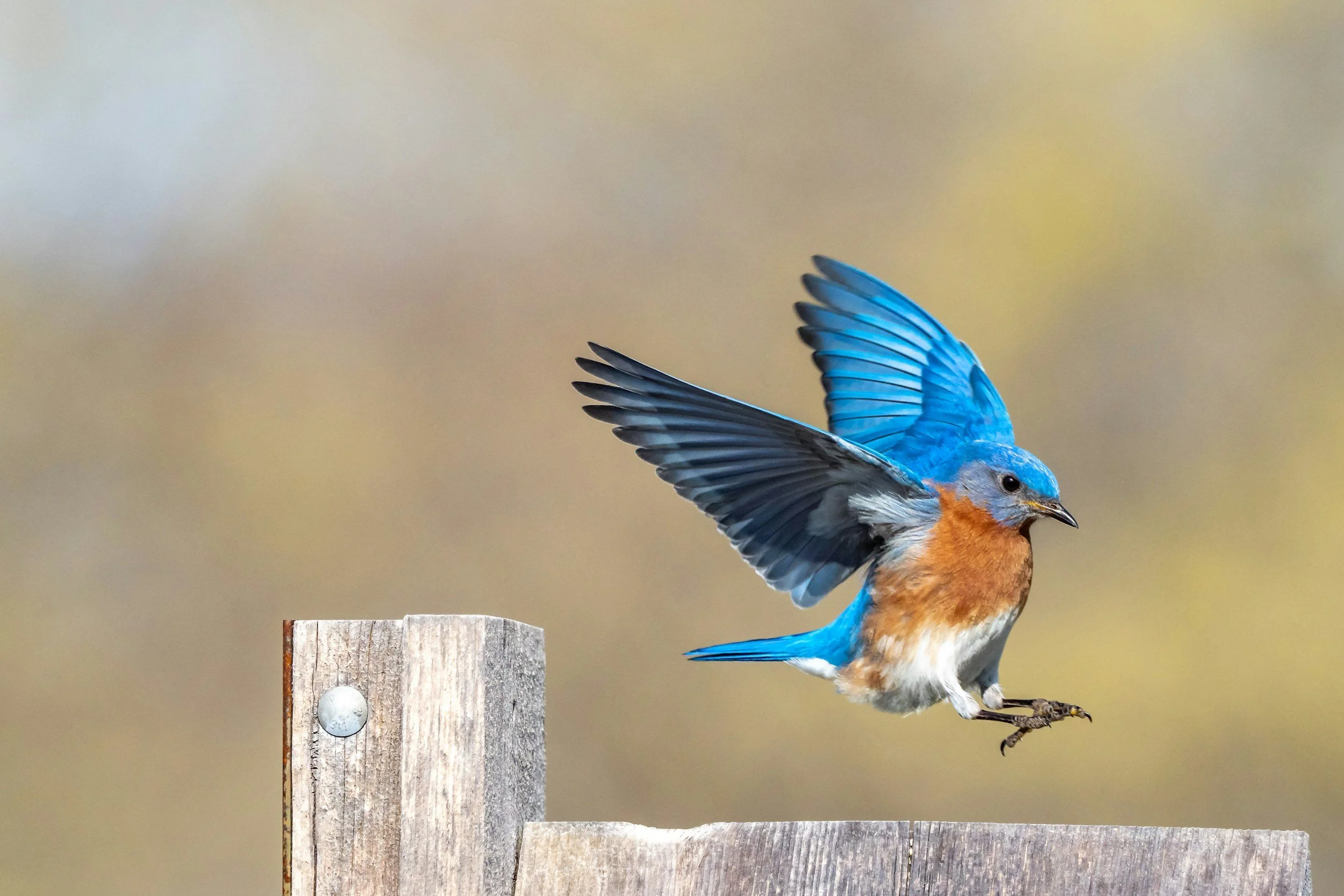
From Injury to Flight, from Seed to Soil
Protecting biodiversity in North Carolina by rehabilitating native songbirds and conserving native orchids and carnivorous plants. Our work blends evidence-based care, habitat restoration, and ethical propagation to heal and restore native ecosystems.
Explore our work
Four connected ways to protect biodiversity in North Carolina
Together, these programs support native wildlife, resilient plant communities, restored habitats, and informed stewardship across North Carolina.
Program in development
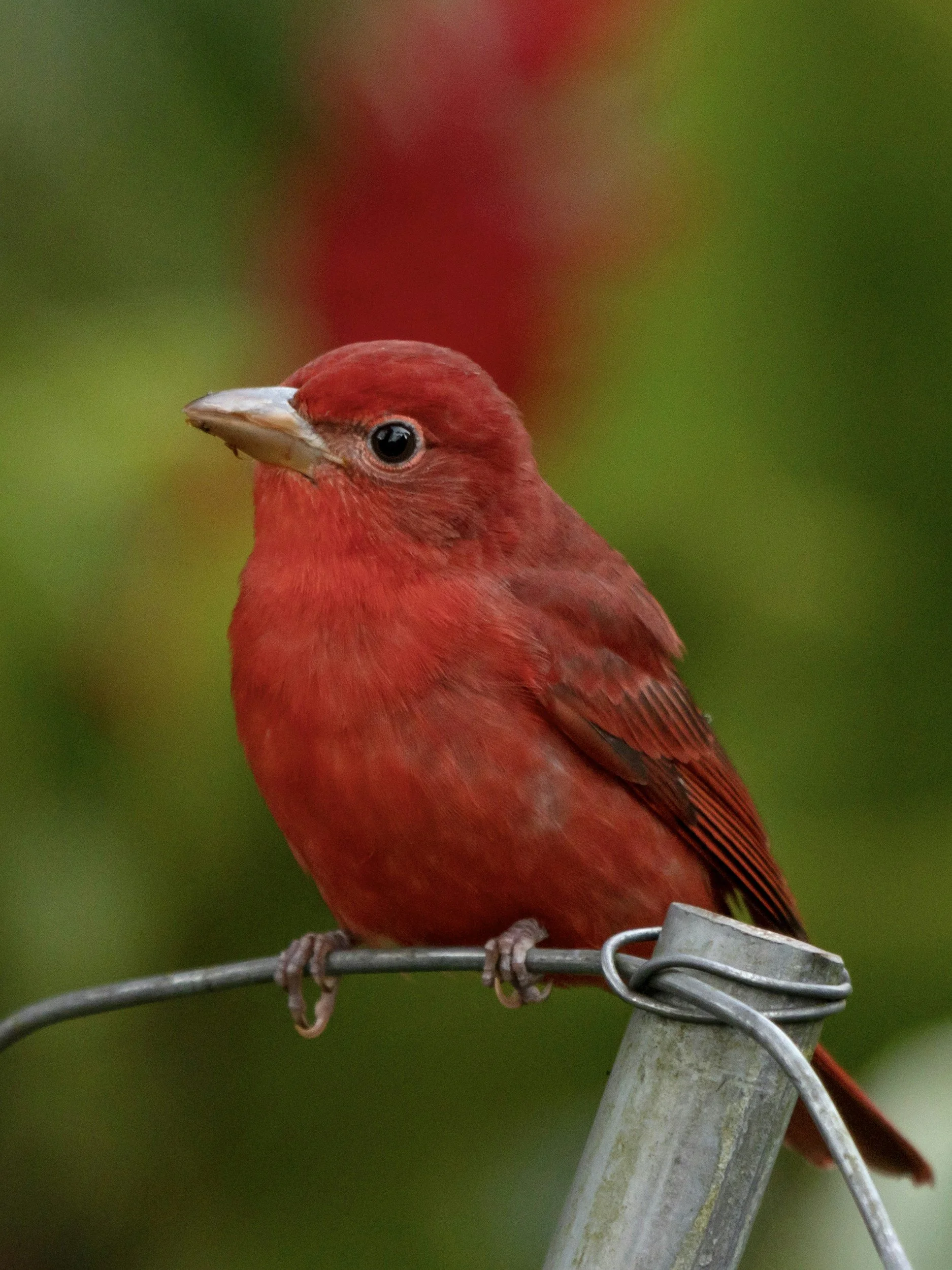
Songbird Rehabilitation
Developing the facilities, permits, and protocols needed to provide evidence-based care for injured and orphaned native songbirds and return releasable birds to the wild.
Current work
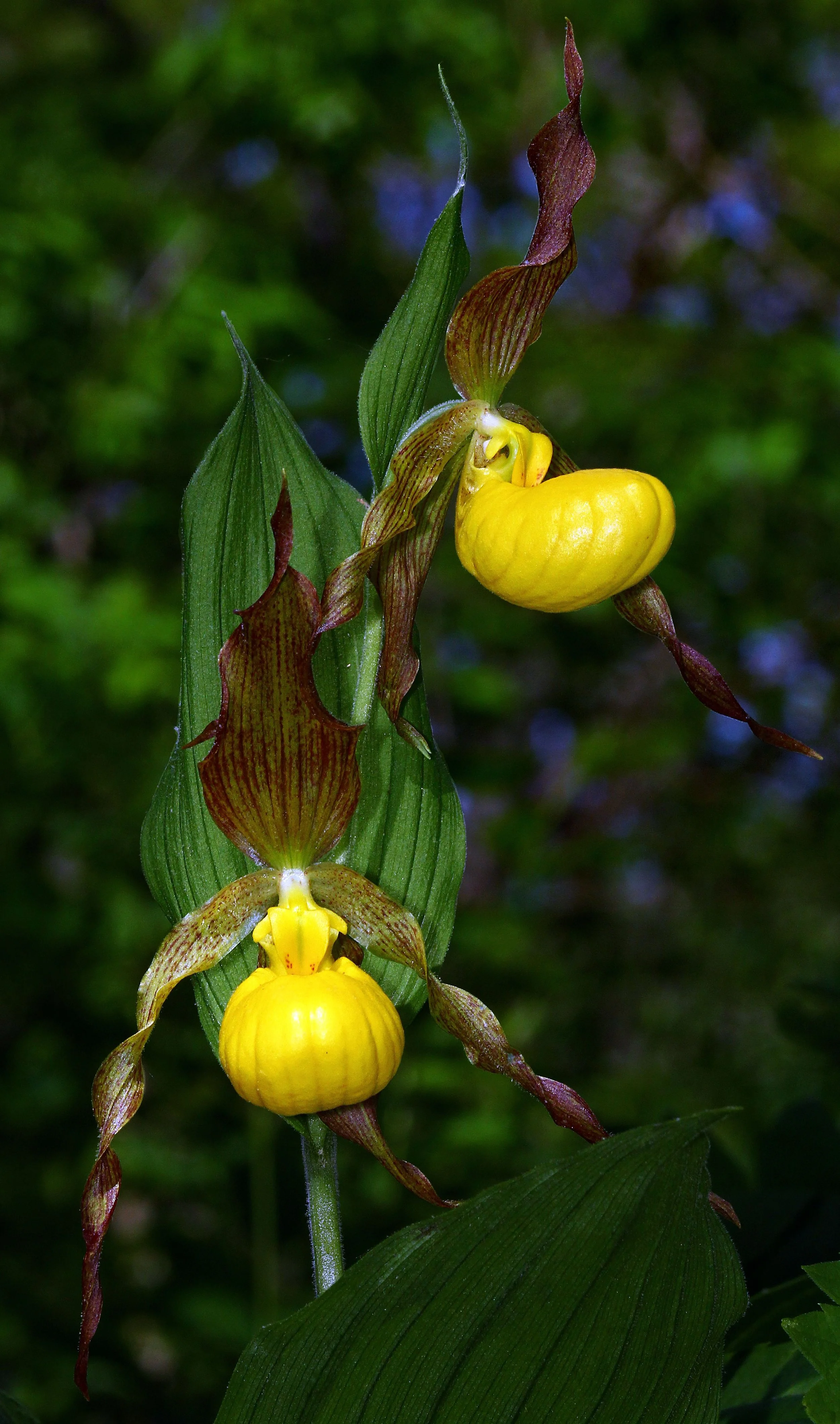
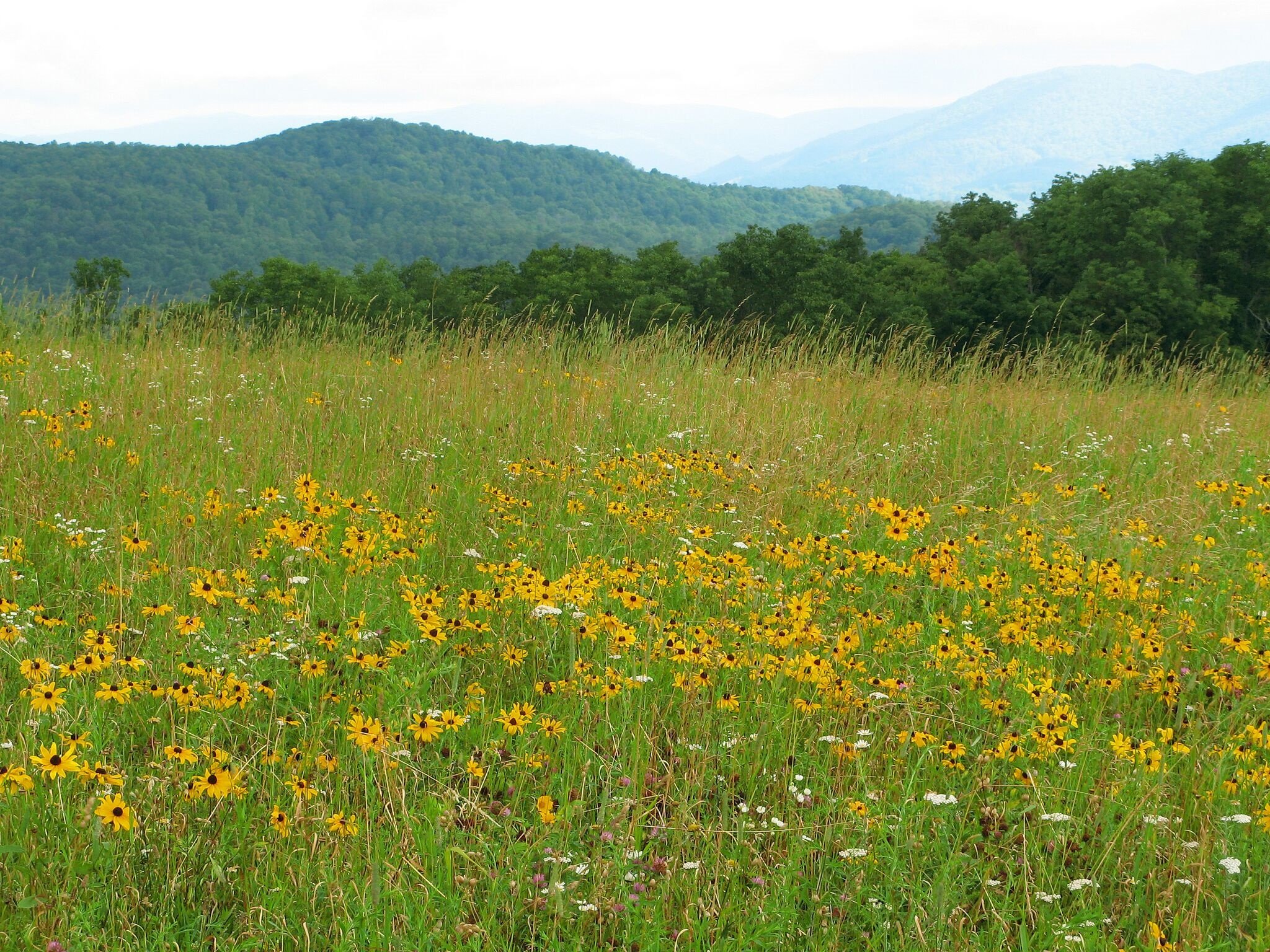
Plant Conservation
Advancing conservation of North Carolina’s native orchids and carnivorous plants through habitat-focused work and the careful development of permitted, ethical propagation.
Current work
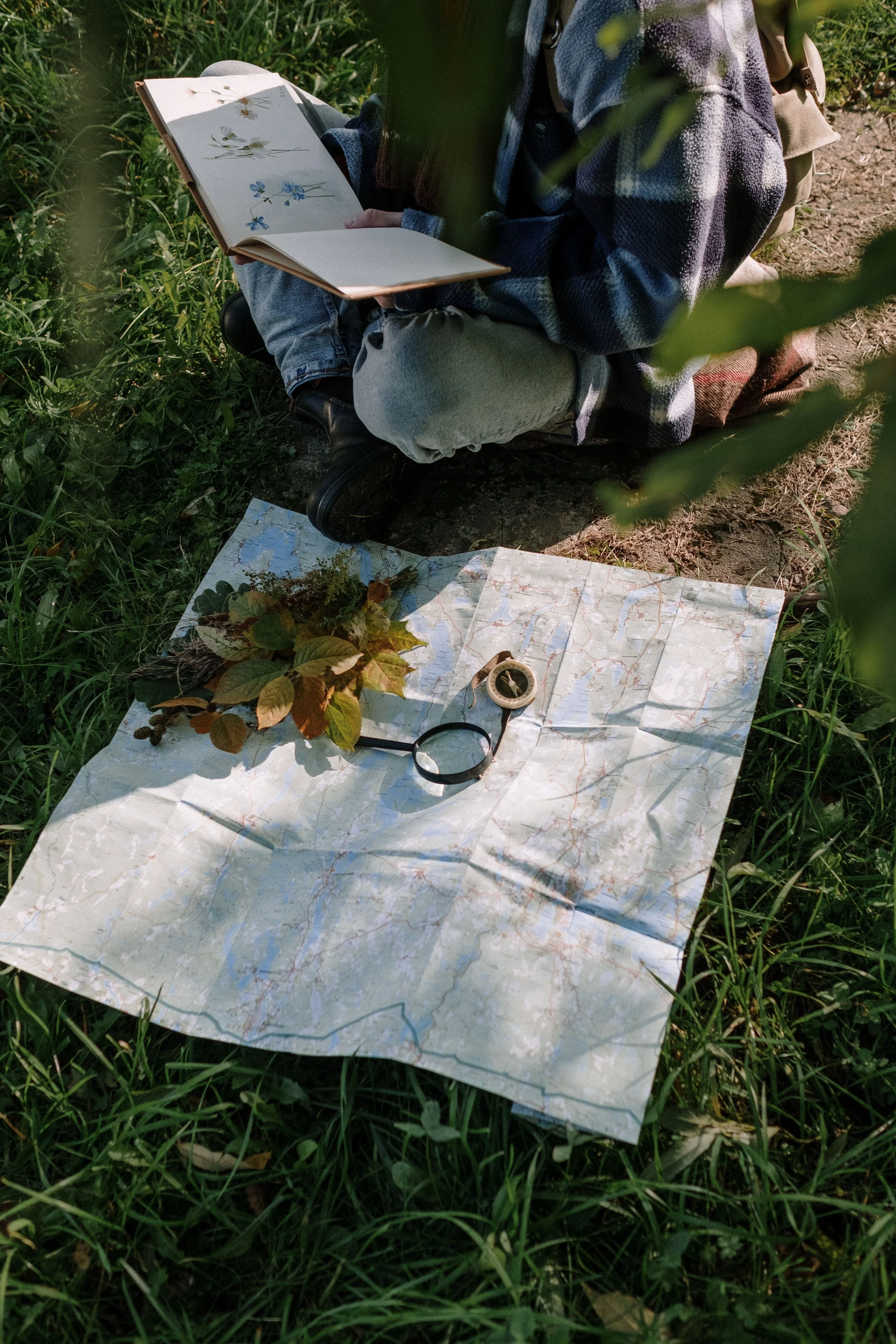
Habitat Restoration
Supporting the restoration of native habitats that sustain birds, rare plants, pollinators, and other wildlife.
Current work
Public Education
Sharing science-based guidance that helps people understand native species, respond responsibly to wildlife, and protect local ecosystems.
Careful growth. Lasting Impact.
Building the foundation this work deserves
We’re developing facilities, securing required permits and certifications, and building partnerships with local experts, landowners, and agencies.
Donations support our current conservation and public education work while helping us responsibly develop future native songbird rehabilitation capabilities.
Choose the kind of support that fits you. Every gift strengthens today’s conservation and education work while helping us develop future programs responsibly.
Give once
Support the Conservancy’s most immediate needs.
Nature Needs Steady Support
Help build conservation work that lasts
Give monthly
Provide dependable support throughout the year.


Become a member
Join the Friends of the Conservancy community.
Shop for conservation
Explore original artwork and nature-inspired goods celebrating North Carolina’s native songbirds, orchids, and carnivorous plants. All net proceeds support the Conservancy’s conservation, education, and program development work. Merchandise purchases are not charitable contributions.
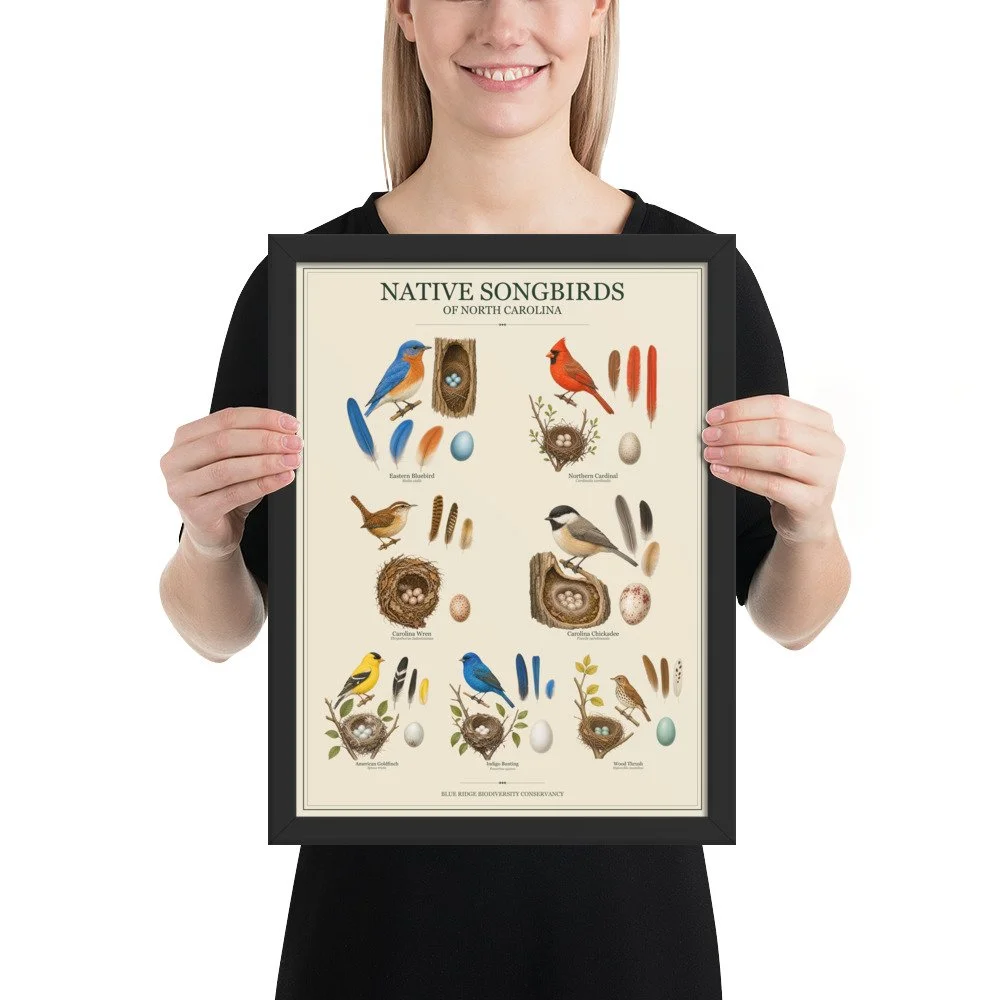
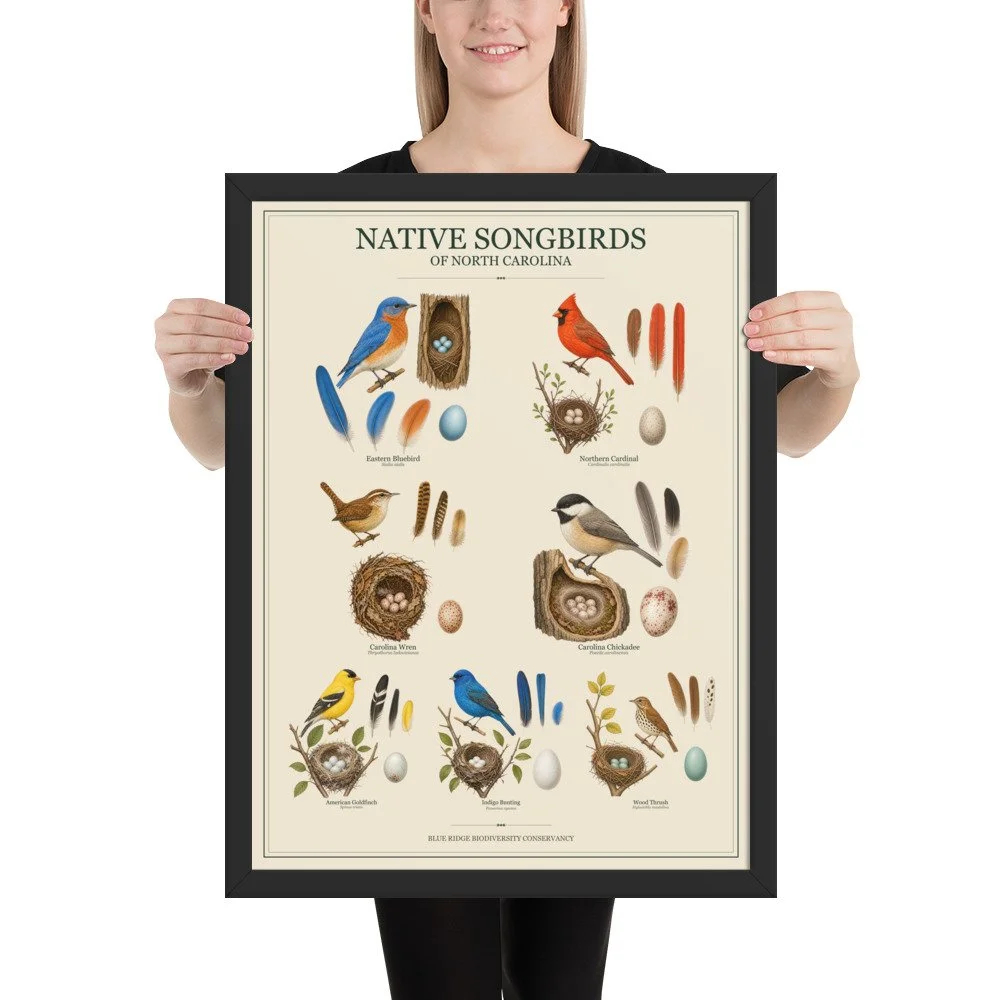
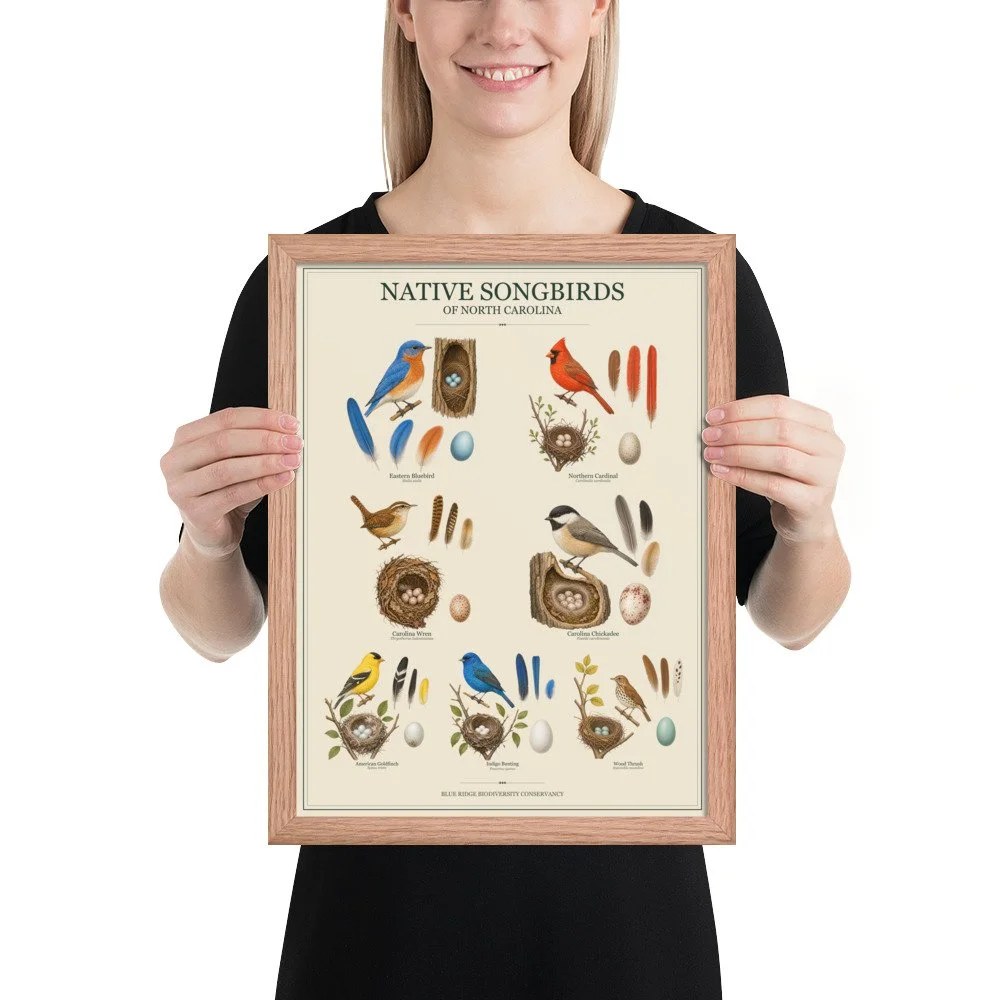
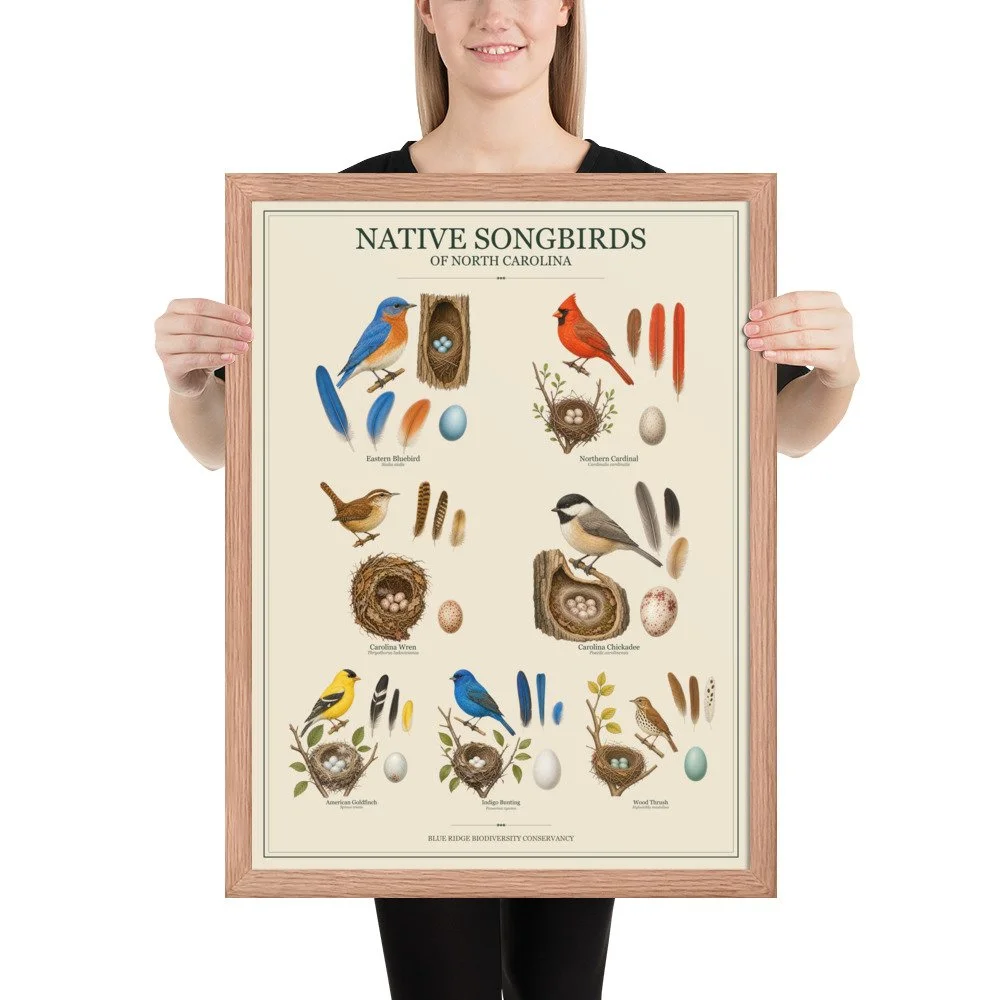
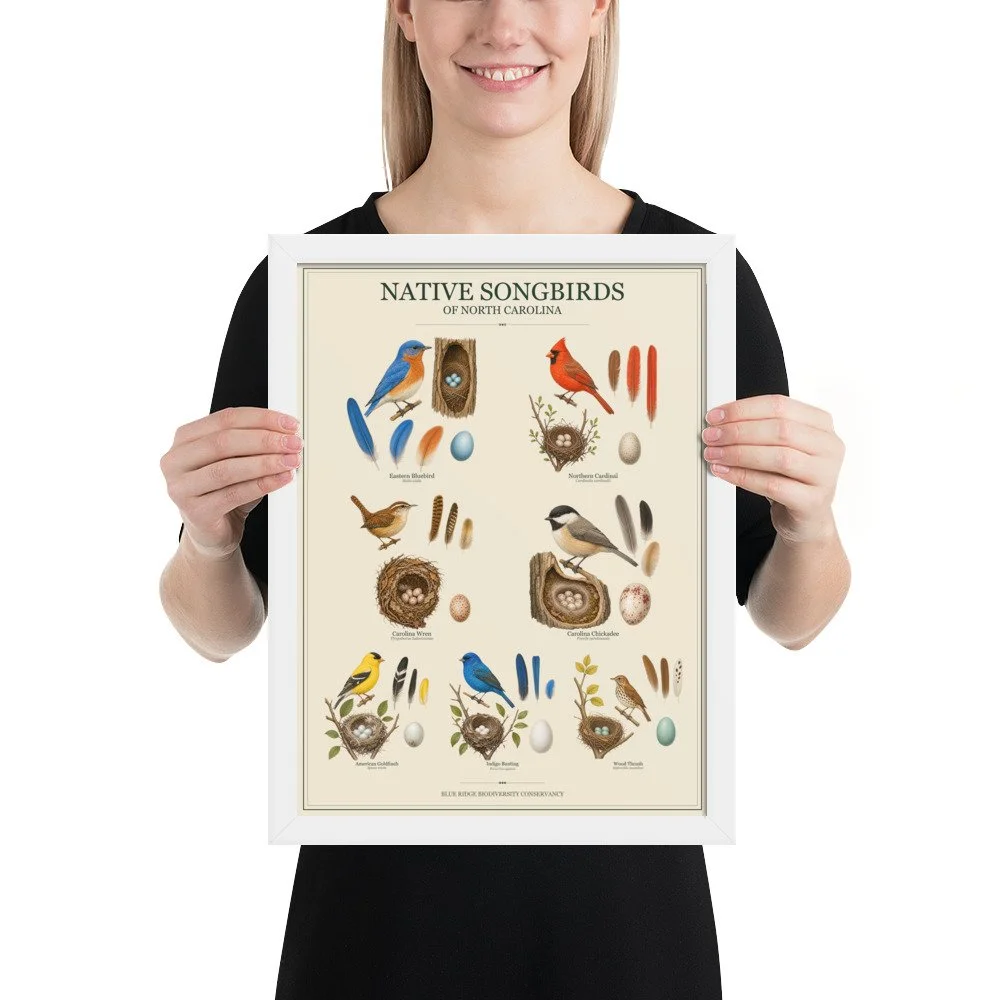
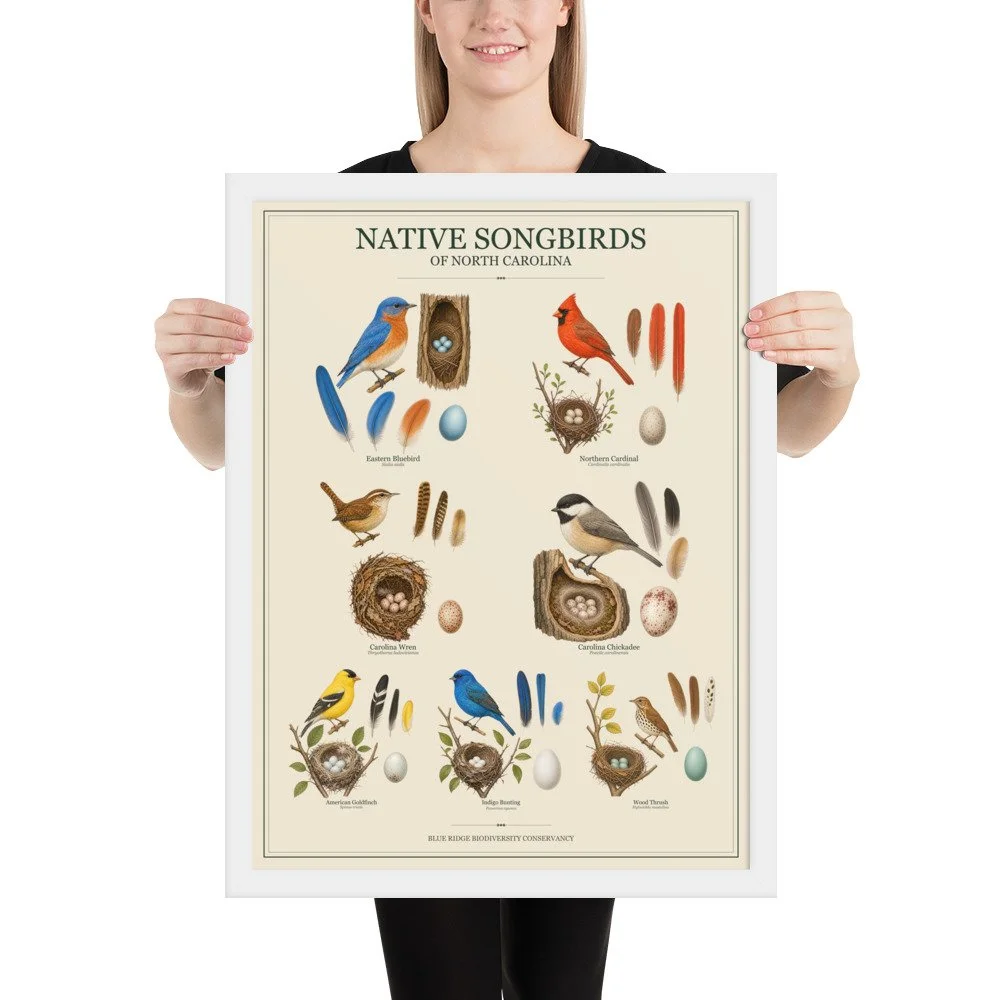
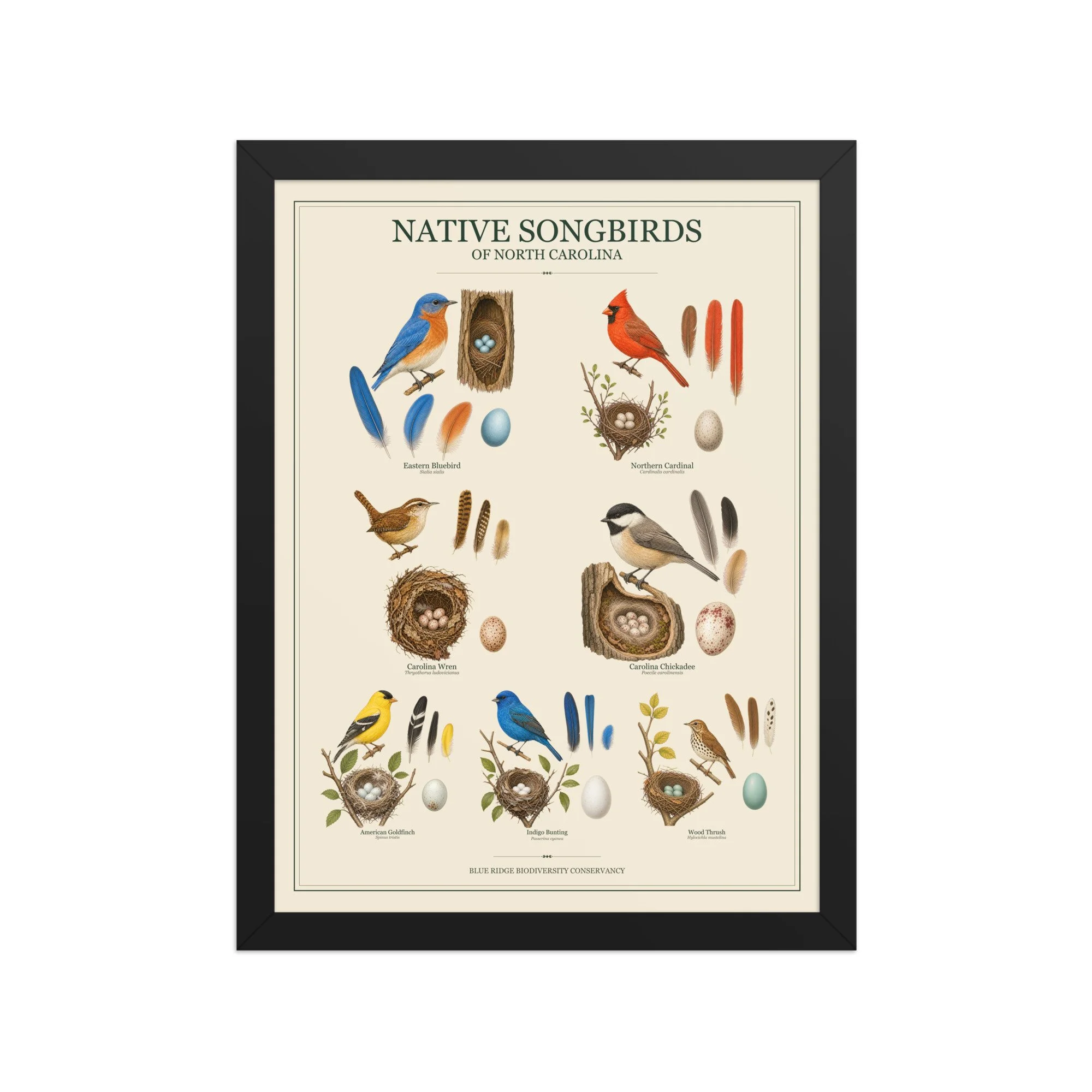
Bring the color and character of North Carolina’s native songbirds indoors with this vintage-inspired ornithological print. The composition pairs carefully illustrated birds with detailed studies of feathers, eggs, nests, and natural perches, evoking the richly observed bird plates found in historic field guides and museum collections.
Warm paper tones and naturalistic colors give the artwork a timeless quality that complements traditional, cottage, woodland, and nature-inspired interiors. It makes a thoughtful gift for birdwatchers, gardeners, naturalists, and anyone who enjoys the familiar birds of the Carolina landscape. This framed print celebrates the birds that bring North Carolina’s forests, fields, and gardens to life.
Designed exclusively for Blue Ridge Biodiversity Conservancy, this original artwork is not available anywhere else. One hundred percent of net proceeds from every purchase supports the Conservancy’s mission.
• Ayous wood .75″ (1.9 cm) thick frame from renewable forests
• Paper thickness: 10.3 mil (0.26 mm)
• Paper weight: 189 g/m²
• Lightweight
• Acrylite front protector
• Hanging hardware included
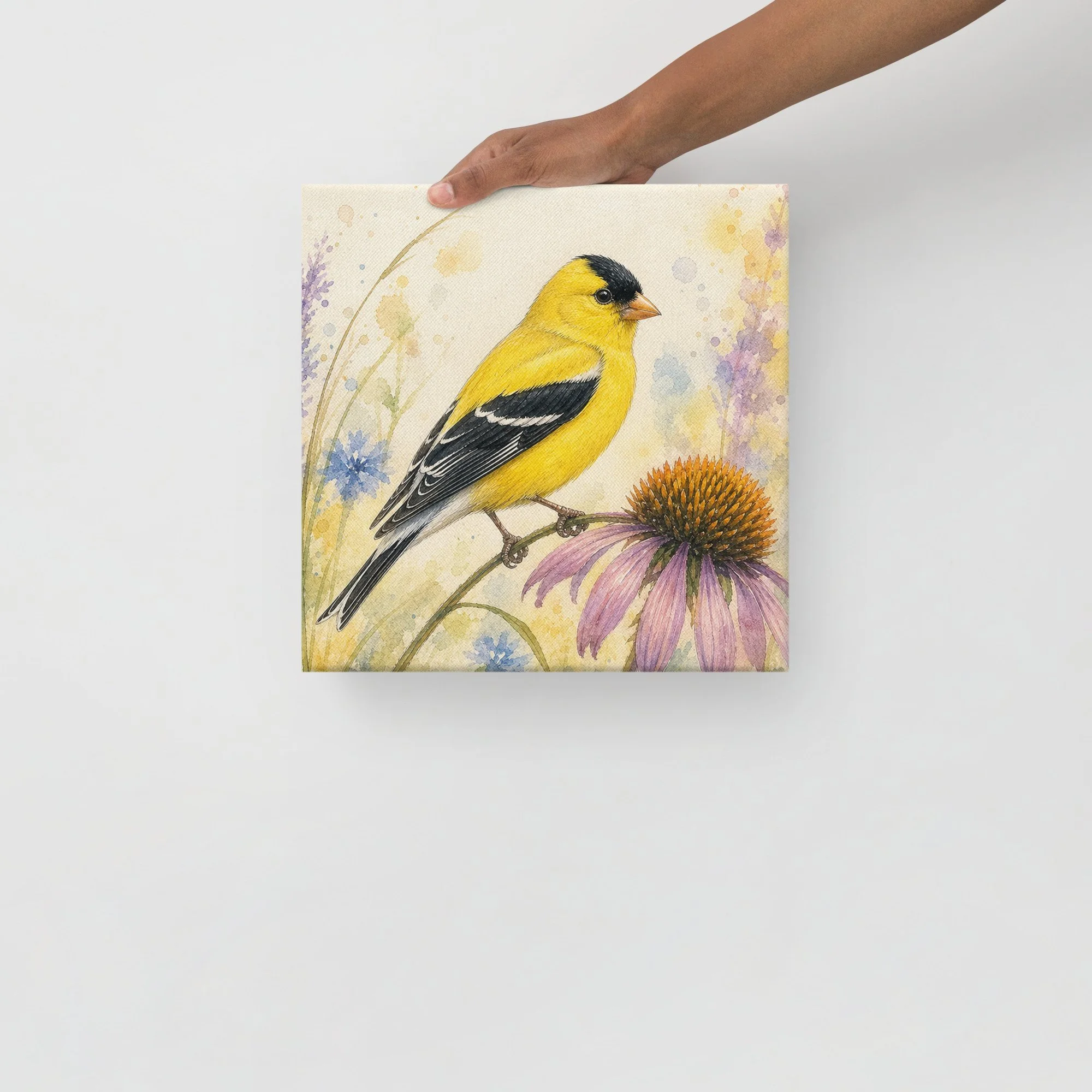
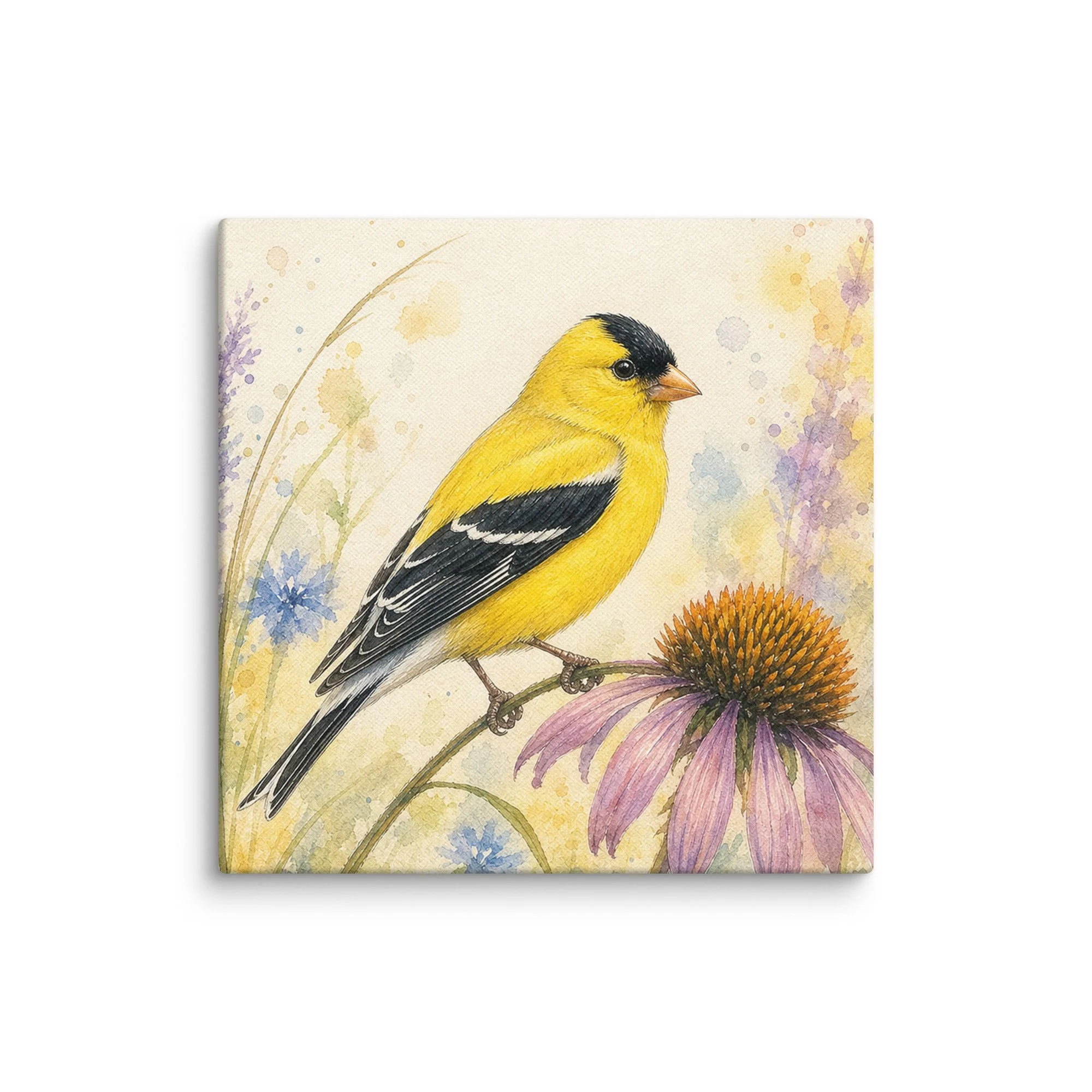
Brighten your walls with the sunny color of the American Goldfinch. Its brilliant yellow plumage and bold black markings stand out against expressive watercolor washes, creating a piece that feels cheerful, light, and full of life. This gallery-wrapped canvas makes a lovely accent for kitchens, sunrooms, offices, or colorful nature-inspired spaces.
Designed exclusively for Blue Ridge Biodiversity Conservancy, this original artwork is not available anywhere else. One hundred percent of net proceeds from every purchase supports the Conservancy’s mission.
• 1.25″ (3.18 cm) thick poly-cotton blend canvas
• Canvas fabric weight: 10.15 +/- 0.74 oz./yd.² (344 g/m² +/- 25g/m²)
• Fade-resistant
• Hand-stretched over solid wood stretcher bars
• Mounting brackets included
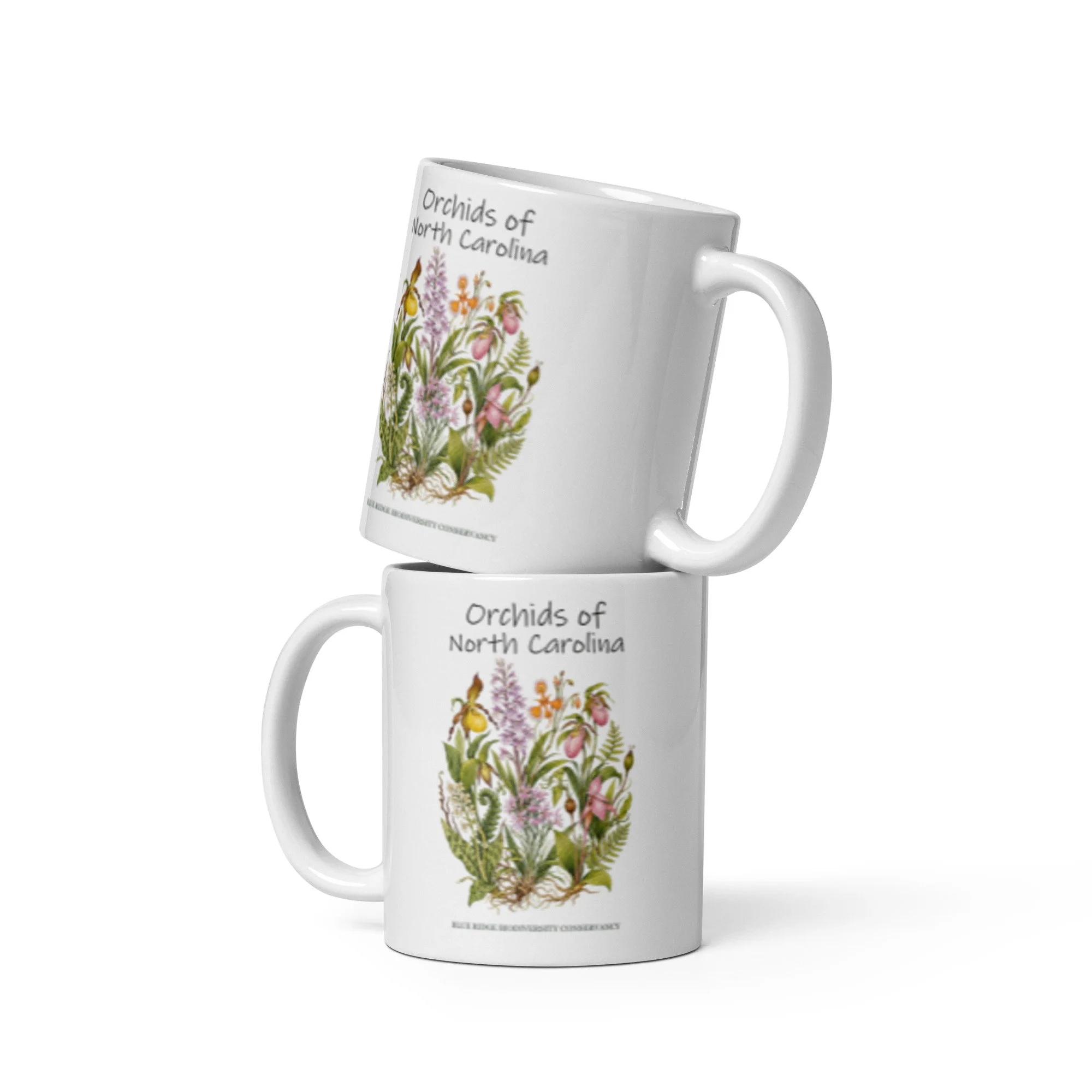
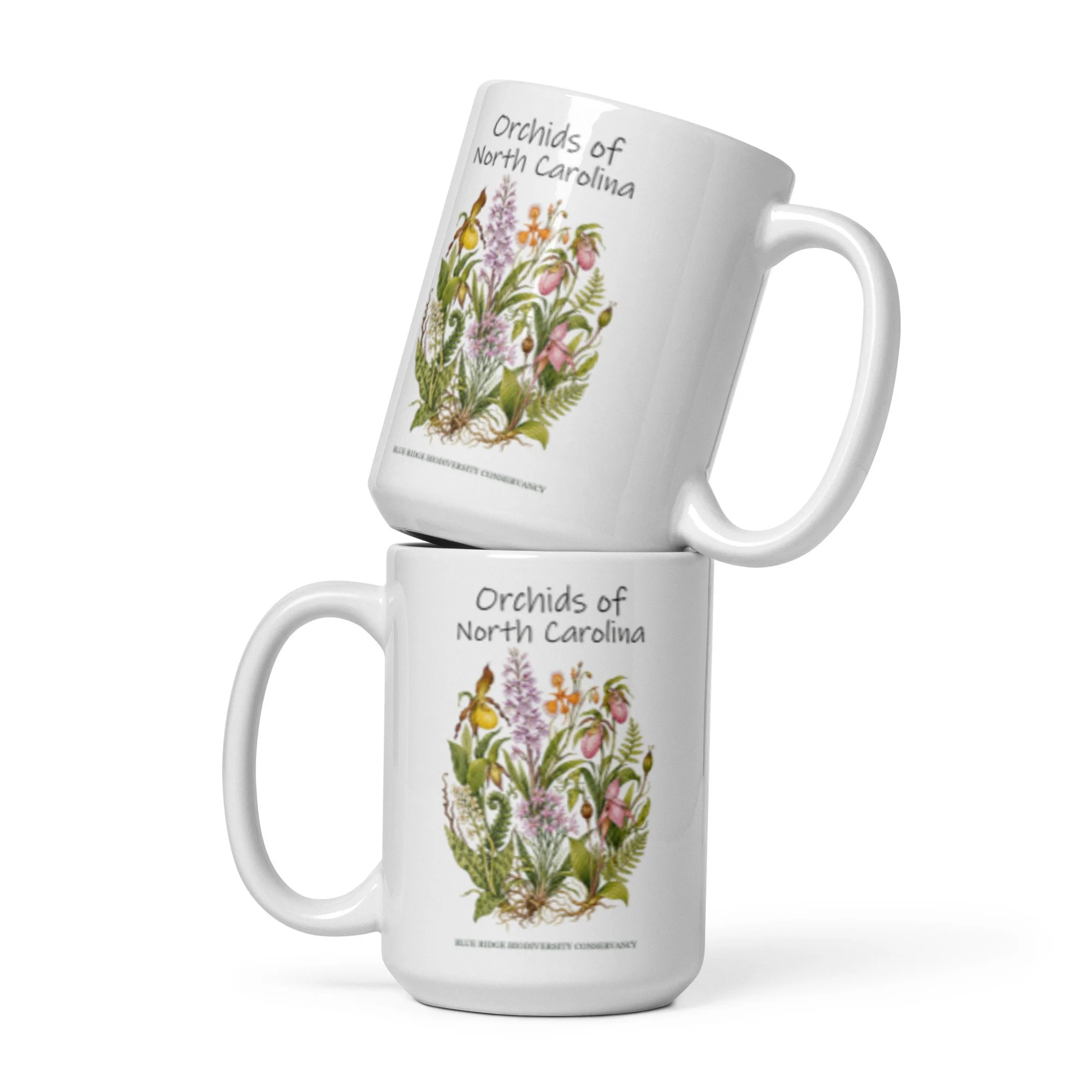
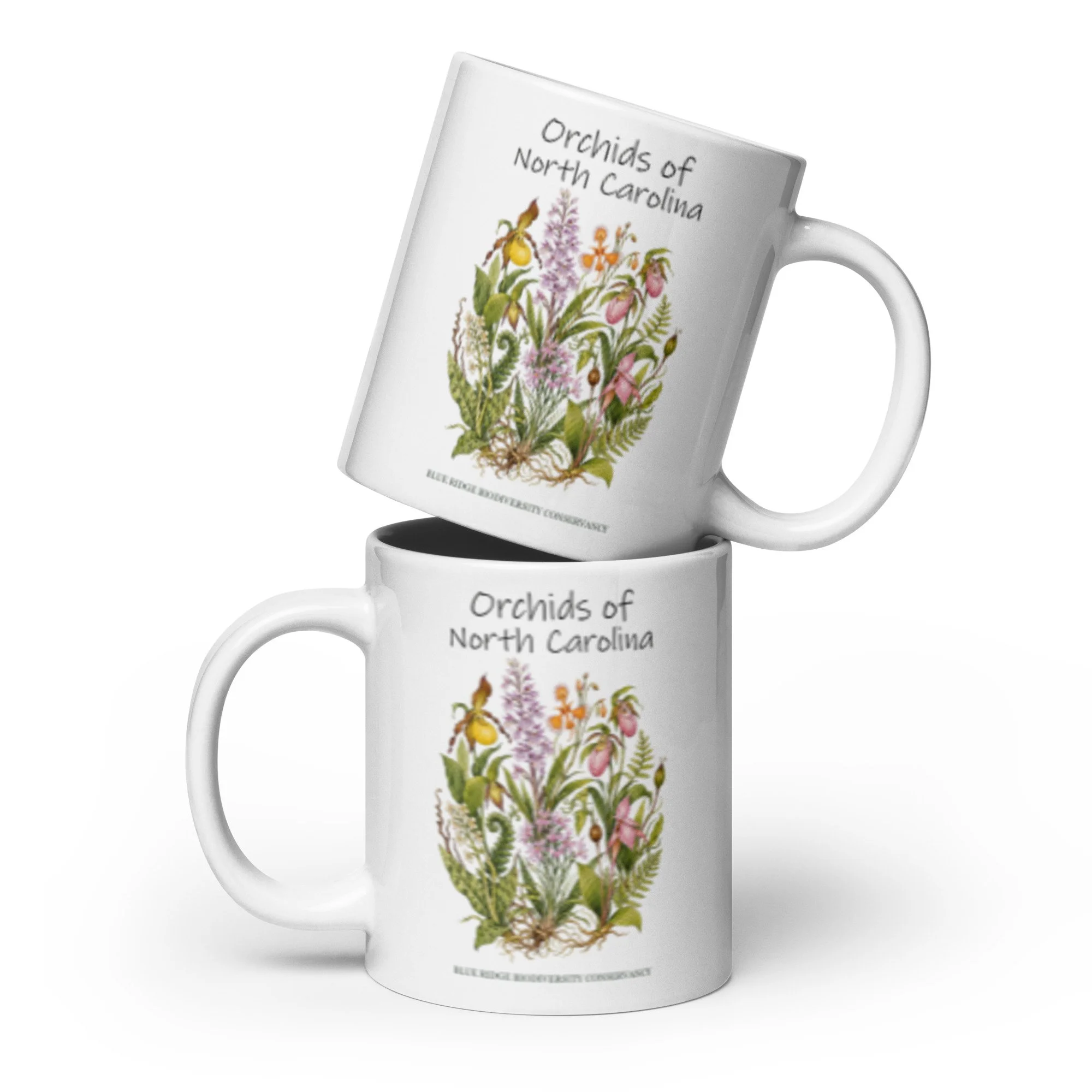
Enjoy your favorite coffee, tea, or cocoa alongside the remarkable native orchids of North Carolina. This glossy white ceramic mug features a colorful botanical arrangement of orchids, foliage, roots, and seed structures beneath a relaxed, hand-lettered title.
Designed exclusively for Blue Ridge Biodiversity Conservancy, this original artwork is not available anywhere else. One hundred percent of net proceeds from every purchase supports the Conservancy’s mission.
• Ceramic
• 11 oz mug dimensions: 3.85″ (9.8 cm) in height, 3.35″ (8.5 cm) in diameter
• 15 oz mug dimensions: 4.7″ (12 cm) in height, 3.35″ (8.5 cm) in diameter
• 20 oz mug dimensions: 4.3″ (10.9 cm) in height, 3.7″ (9.3 cm) in diameter
• Dishwasher and microwave safe
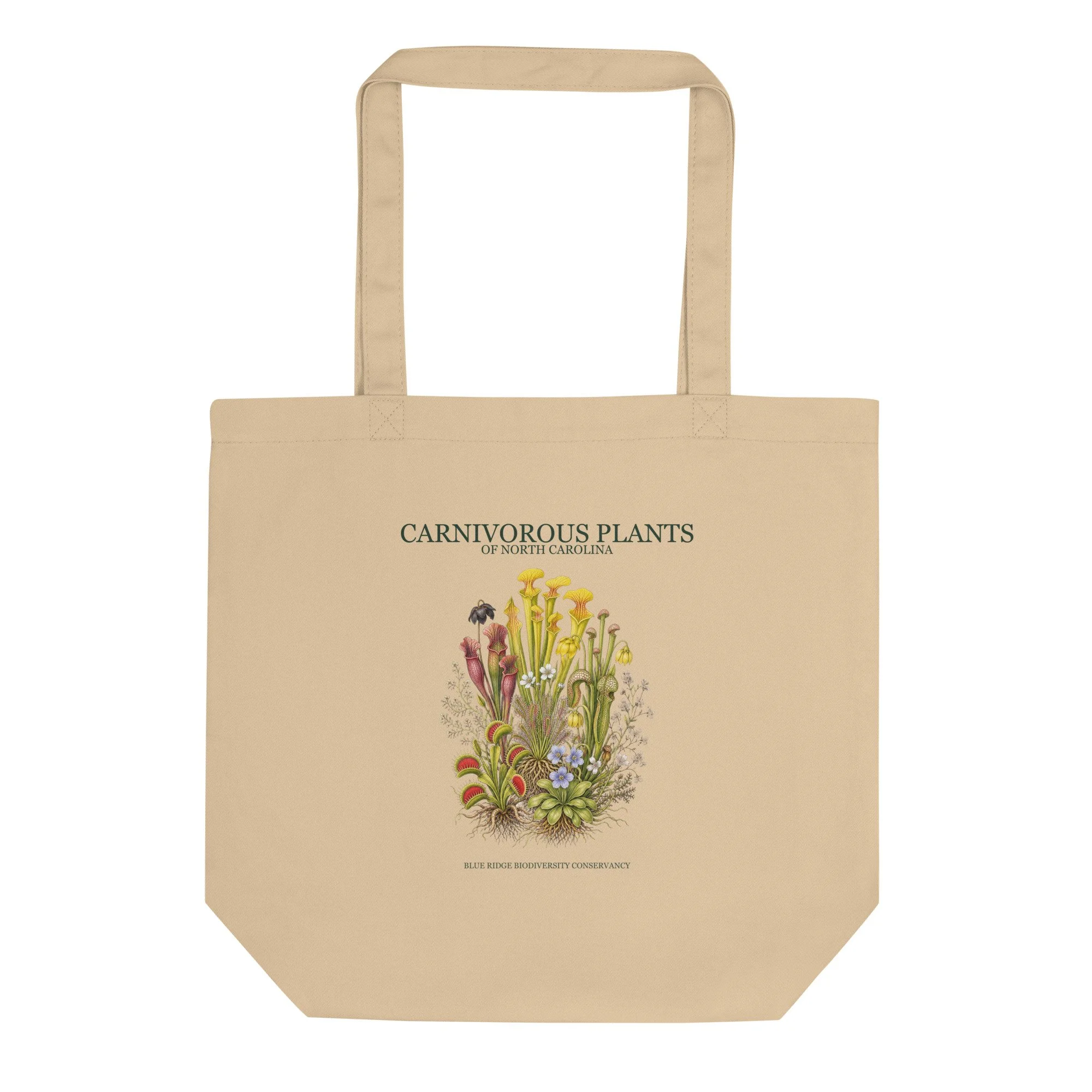
Discover the strange and beautiful world of North Carolina’s native carnivorous plants. This vibrant design brings together pitcher plants, Venus flytraps, sundews, and other remarkable species adapted to the state’s wetlands and bogs. Rich botanical detail makes it an eye-catching choice for plant collectors, gardeners, naturalists, and fans of the wonderfully unusual. The sturdy organic cotton tote offers plenty of room for everyday necessities, books, shopping, or outdoor adventures.
Designed exclusively for Blue Ridge Biodiversity Conservancy, this original artwork is not available anywhere else. One hundred percent of net proceeds from every purchase supports the Conservancy’s mission.
• 100% certified organic cotton 3/1 twill
• Fabric weight: 8 oz/yd² (272 g/m²)
• Dimensions: 16″ × 14 ½″ × 5″ (40.6 cm × 35.6 cm × 12.7 cm)
• Weight limit: 30 lbs (13.6 kg)
• 1″ (2.5 cm) wide dual straps, 24.5″ (62.2 cm) length
• Open main compartment
FAQs
-
Not yet. We are developing facilities and securing the permits and certifications required before we can accept birds. Until public intake opens, please use our Injured Bird Guide for immediate guidance and help locating a licensed wildlife rehabilitator. We will post opening updates on this website.
-
First, determine whether the bird truly needs intervention—many young birds are still being cared for by their parents. Do not give food or water. Use our Injured Bird Guide for immediate steps and help locating a licensed wildlife rehabilitator.
-
Yes. Donations are welcome and help build the careful, compliant foundation needed to grow our conservation and rehabilitation programs. This includes facility development, permitting and certification, habitat restoration, native plant conservation, and public education.
-
We follow peer-reviewed science and professional standards, document outcomes, and continuously improve our methods. For birds, that means vet-guided rehabilitation protocols and release criteria. For plants, it means ethical, disease-free propagation and habitat-appropriate conservation methods—always measured, always improving.